

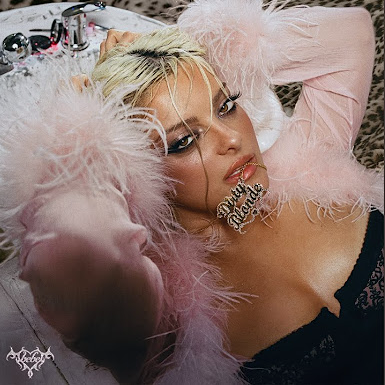
Four albums in, it feels like Bebe Rexha is finally stepping out on her own terms as an artist with ‘Dirty Blonde’. Billed as a rebirth as she’s no longer constrained by any label expectations or demands, it gives her all the room she could want to spread her wings.
It’s odd, then, that opener Hysteria relies on a sample from Da Hool’s Meet Her At the Loveparade. Though its beat is propulsive and demands movement, it doesn’t feel like pure, uncut Bebe Rexha. The third track, New Religion, falls into the same trap, interpolating Faithless’s dance classic Insomnia and muddying the record’s apparent mission statement.
Fortunately, the rest of ‘Dirty Blonde’ soon picks up steam. Çike Çike struts with gently thrumming synths, the vocal delivery dripping with attitude and its understated production letting its melodic flourishes shine.
I Like You Better Than Me finds space for vulnerability in club rhythms, spinning a tale of insecurity and comparison to others, while Drink and a Little Love is messier, embracing country-pop initially before returning to the dancefloor.
Contradictions are at the heart of ‘Dirty Blonde’. There’s unrequited love songs (The Way I Want You), vulnerable lyrics meshing with floor-filling beats, diversions into pop ballads (Time) and a mishmash of styles from club to electropop and slow burners.
As jumbled as it is, that’s arguably the point. All these versions of Bebe Rexha can coexist in a single album, though the biggest hits not being entirely her own work do let it down. Still, it’s a mostly-bold statement of independence that offers an exciting look at what she can do with it.
Discussion and Reviews
Leave A Comment - Bebe Rexha
Loading comments…